
Review · ROME
Rome Morning Vespa Sidecar Tour in Rome with Cappuccino
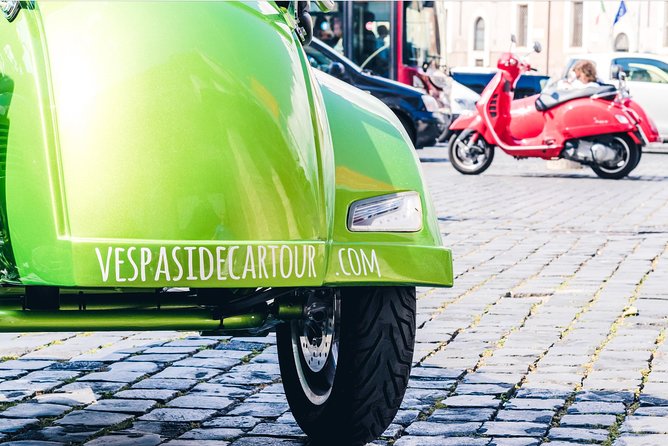
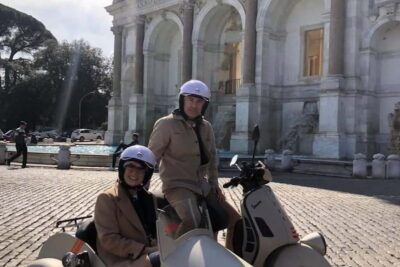
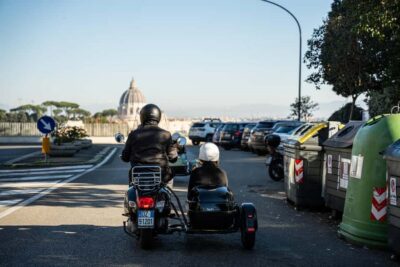
Rome moves better on two wheels. This three-hour morning tour puts you in a Vespa sidecar while a professional driver handles traffic and a guide explains the city through a headset. I like the way it reaches about twelve major sights in one outing, and I like the small-group feel, with no more than 12 people.
The cappuccino and cornetto stop gives the morning a proper Roman pause, while included entry to the Pantheon adds real value to the $163.26 price. The trade-off is simple: this is a fast overview, not a slow, in-depth visit to every monument, and the ride depends on good weather.
Key points to know before you book
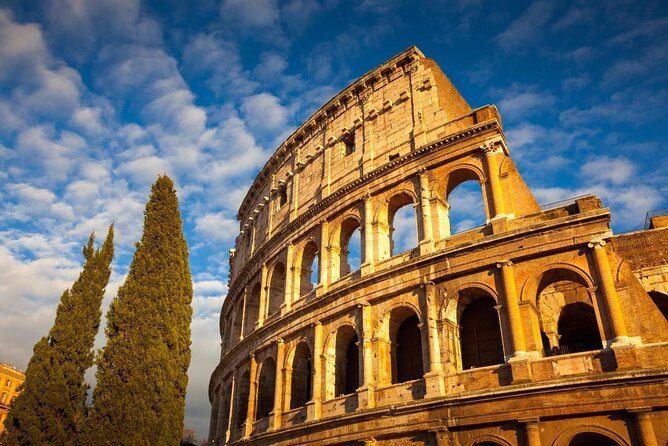
- Twelve major sights in three hours: You cover fountains, piazzas, ancient monuments, Vatican City, hilltop viewpoints, and old neighborhoods without wearing out your feet.
- A driver does the hard part: You can watch Rome instead of worrying about parking, directions, or city traffic.
- Pantheon entry is included: This is the only monument where an interior visit is clearly built into the tour.
- Morning timing helps: The 9 a.m. start gives you a useful introduction before the day gets away from you.
- Seats may be shared: A Vespa carries two people, one in the sidecar and one behind the driver, with seat changes possible at stops.
- It is a proper Roman breakfast: Expect traditional cappuccino and a cornetto, with dietary needs noted when you book.
Why a Vespa sidecar works so well in Rome
Rome is not a tidy sightseeing city. Its grand monuments sit among narrow lanes, busy roads, small churches, cafes, and ordinary neighborhoods. A coach can feel too large, while walking from one end of the center to another takes time and energy.
The Vespa offers a middle path. You move quickly between the major sights, but you remain close to the street. You see changing views, hear the city around you, and pass through places that are easy to miss from a large vehicle. You also avoid the tiring work of navigating Rome on foot.
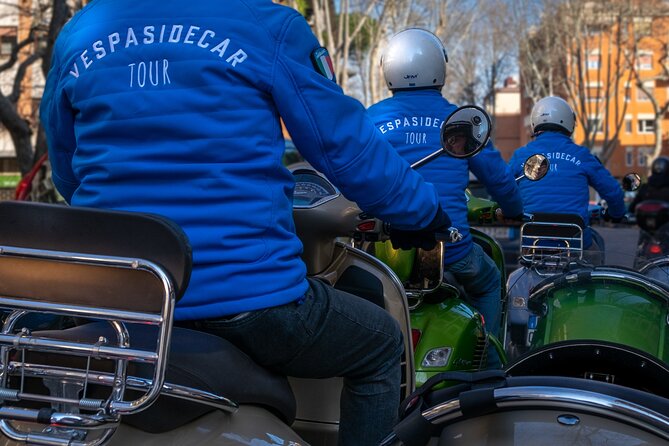
I especially like that you are not expected to drive. Your professional driver deals with the traffic and parking, while your licensed guide gives live commentary through headphones. That setup matters in Rome, where you want to look at a fountain or palace instead of watching every turn.
The tour is capped at 12 people, which keeps it smaller than a standard bus outing. The ride itself is part of the entertainment. Several people find that the Vespa attracts smiles and waves as it passes, so you may feel a bit like part of Rome’s street theater.
Still, do not mistake this for a private sightseeing car. If you book one seat, you share the Vespa with another person. One passenger sits in the sidecar and the other rides behind the driver. At stops, you can switch positions, allowing everyone a turn in the sidecar.
More Vespa Sidecar Tours in Rome:
- Vespa Sidecar Tour By Night with Pickup
★ 5.0 · 1,803 reviews - Rome: Highlights Vespa Sidecar Tour with Coffee and Gelato
★ 4.9 · 747 reviews - Rome Afternoon Sightseeing Vespa Sidecar Tour with Gourmet Gelato
★ 5.0 · 692 reviews
Starting at Piazza della Repubblica
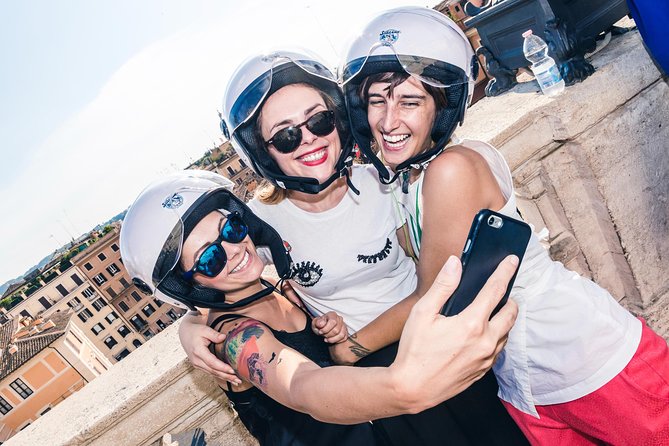
Meet at Piazza della Repubblica for a 9 a.m. departure. This grand circular square was created during the redevelopment of Rome after the city became Italy’s capital. Its centerpiece is the Fontana delle Naiadi, surrounded by large nineteenth-century buildings and the remains of ancient Roman baths.
It is a fitting starting point because Rome’s story is already visible here: ancient remains, modern national history, and monumental city planning in one place. You get about 10 minutes to look around before the ride begins.
The early start has two benefits. You have cooler morning hours for the ride, and you get your bearings before tackling the rest of your day. It also leaves plenty of time afterward for a museum, lunch, or a longer visit to one of the places you first see from the road.
Quirinal Hill and the Trevi Fountain
The next short stop is the Quirinal Palace, one of the official residences of Italy’s president. It has also served as home to 30 popes and four kings of Italy. The palace sits on the Quirinal Hill, one of Rome’s famous seven hills and the highest of them.
You spend only about five minutes here, so think of it as a photo and orientation stop rather than a palace visit. The guide’s commentary helps explain why this hill matters, but you will not tour the interior.
The tour then reaches the Trevi Fountain for about 30 minutes. This is one of the better stop lengths of the morning. The fountain is large, ornate, and easy to appreciate from several angles, though the surrounding space can feel tight when crowds gather.
Trevi’s story reaches back to the Aqua Virgo aqueduct, which ended here in ancient times. The present fountain was completed in 1762 after work by Nicola Salvi and Giuseppe Pannini. Its name comes from Tre Vie, meaning three streets, because three roads meet at this point.
You have time for photos and a closer look. The fountain itself is free, but the real value here is the convenience. Your driver gets you close to the center, and you do not need to spend part of the morning figuring out how to reach it.
The Pantheon and a Roman breakfast
The Pantheon is the tour’s main interior visit. The admission fee is included, and you get about 30 minutes to see one of the best-preserved buildings from ancient Rome.
The building was completed in 126 AD and began as a Roman temple. Its most famous feature is the oculus, the round opening at the top of the dome that lets in the building’s main natural light. It is a simple idea with a powerful effect, especially when sunlight or a passing cloud changes the interior.
Thirty minutes is enough to appreciate the structure and hear the main stories, but not enough for a long architectural study. If the Pantheon is high on your list, you will probably want to return later for a slower look.
Nearby, the group stops for cappuccino and a cornetto. This is a small but important part of the experience. A Roman morning is better with coffee and a pastry, and the break gives your ears, back, and camera a rest.
The cornetto is Italy’s answer to a breakfast pastry, often light and sweet. You can also request special dietary needs through the booking form. Water is provided during the outing as well, according to the included arrangements described by the operator.
More Morning Tours in Rome:
- Morning Vespa Sidecar Tour with Cappuccino
★ 5.0 · 3 reviews - Angkor Sunrise Vespa Tour / Tuk Tuk or Car
★ 5.0 · 87 reviews - Countryside Morning Life Vespa Tour
★ 5.0 · 37 reviews - Saigon Morning and Afternoon Adventure by Vespa
★ 5.0 · 3 reviews
Piazza Navona and St. Peter’s Square
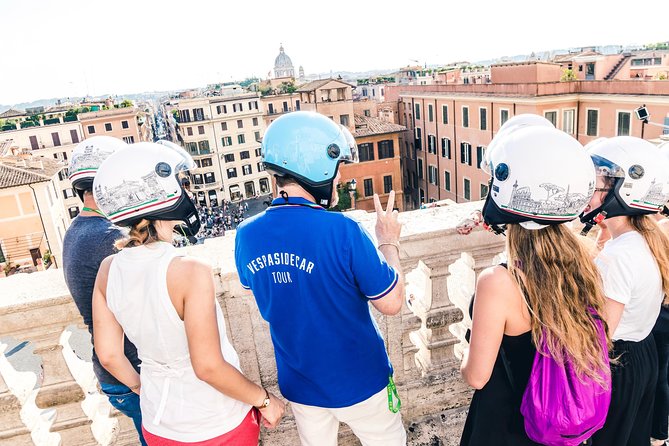
Piazza Navona follows the Pantheon area. The square occupies the site of an ancient Roman stadium and is known for its Baroque buildings and fountains. Bernini’s Fountain of the Four Rivers is the main attraction.
You should expect to view the square as part of the route rather than spend a long period exploring every corner. That is one of the tour’s recurring patterns: the Vespa gets you to many places, then the guide gives you enough time and context to decide where you want to return.
The route continues to St. Peter’s Square in Vatican City. Bernini designed this huge space in the seventeenth century, and its sweeping colonnades help frame St. Peter’s Basilica. The square can hold more than 300,000 people, a fact that helps explain its scale.
This stop does not include entry to St. Peter’s Basilica or the Vatican Museums. You see the square from outside. That is still useful, especially if you are visiting Rome for the first time and want to understand how the Vatican fits into the city.
The view from Janiculum Hill
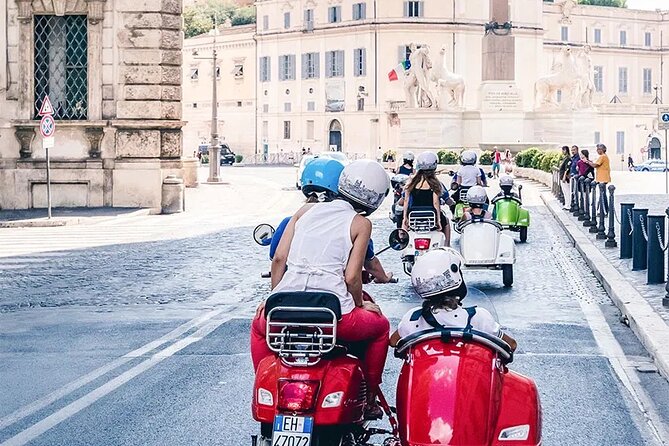
Janiculum Hill, or Gianicolo, is one of the most rewarding stops for city views. It lies just outside ancient Rome and offers a broad panorama across the center. You spend about 15 minutes at the terrace, enough for photographs and a quick look over the rooftops.
The hill also carries an important military story. Giuseppe Garibaldi defended Rome here against French troops, and the paths are marked with sculptures honoring people connected with that struggle.
This is where the Vespa has a clear advantage over a walking route. Reaching the hill takes effort on foot, but the driver brings you up without making it a major project. The view gives you a useful sense of Rome’s size and layout, which can be hard to grasp from street level.
Trastevere, the Jewish Ghetto, and the city’s everyday side
The route passes through Trastevere, known for its bohemian character, narrow lanes, and traditional trattorias. This part of the ride helps balance the grand monuments. You are not only seeing Rome’s official face, but also the streets where restaurants, homes, and neighborhood life fill the spaces between the landmarks.
You also pass through the Jewish Ghetto, one of the city’s most distinctive historic areas. The route does not promise a long walking tour here, so pay close attention to the guide’s commentary and note places you may want to revisit.
I like this part of the itinerary because it shows how Rome works as a living city. A fountain or ancient wall may be only a few minutes from a cafe-lined lane. From the sidecar, you get a quick but memorable look at those changes.
Piazza Venezia and the Colosseum
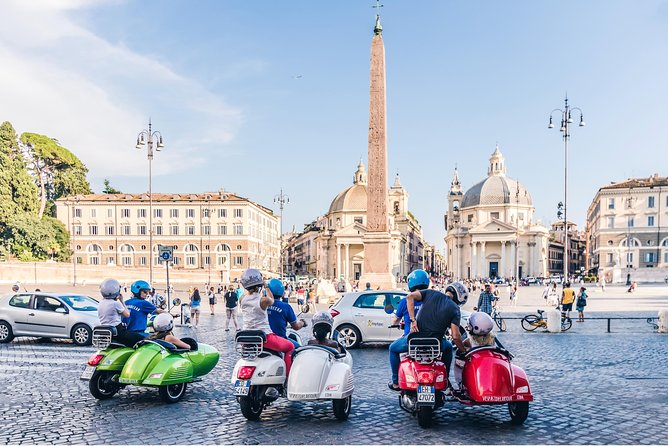
Piazza Venezia brings you to the huge Monument to Victor Emmanuel II, often called the Altare della Patria. It was opened in 1911 to honor Victor Emmanuel II, the first king of unified Italy. The building also contains the Institute for the History of the Italian Risorgimento and the Central Museum of the Risorgimento.
The monument includes the Tomb of the Unknown Soldier, guarded by two soldiers beside an eternal flame. Its bright white stone and oversized scale can divide opinion, but it is impossible to miss. The elevated position also gives you wide views over Rome.
The route then reaches the Colosseum, the Flavian Amphitheatre and perhaps Rome’s most recognizable monument. Nearly 2,000 years old, it was built for public spectacles and remains the clearest symbol of ancient Roman power.
The tour takes you to the Colosseum area, but the listed inclusions do not include entry inside. Plan a separate visit if you want to walk through the arena and underground areas. Ending near this monument is practical because it gives you a strong final landmark and a clear idea of where to spend more time later.
Santa Maria Maggiore and the return
The final listed sight is Basilica di Santa Maria Maggiore, one of Rome’s four major basilicas and the largest of the churches dedicated to the Virgin Mary in the city. The itinerary presents it as a sightseeing stop, not an included interior tour.
From there, the activity returns to the meeting point at Piazza della Repubblica. The whole outing lasts about three hours, though exact time can shift with traffic, stops, and weather.
The route covers an impressive amount of ground. You see central Rome, the Vatican area, Janiculum Hill, Trastevere, the Jewish Ghetto, Piazza Venezia, the Colosseum, and Santa Maria Maggiore in one morning. The cost is easier to justify if you value time and want a guided introduction before choosing which places deserve a longer visit.
Comfort, safety, and practical limits
The operator supplies CE-approved helmets with sterilized disposable head covers. Headsets let you hear the guide while riding, and live commentary continues throughout the route.
The experience is open to most people, but the physical details matter. Children must be at least five years old and accompanied by an adult. A child must be taller than 150 centimeters to sit behind the driver. Otherwise, the child rides in the sidecar.
The sidecar limit is 110 kilograms, or 242 pounds, with a maximum height of 1.90 meters. The person riding behind the driver has a maximum weight of 118 kilograms, or 260 pounds. Pregnant people cannot participate.
The sidecar can feel exposed compared with a car, so bring a light layer even on a pleasant morning. One particularly thoughtful touch described by the operator is the use of blankets and hot water bottles when conditions are cool. Still, dress for the forecast, since the tour requires good weather and may be canceled if rain makes riding unsuitable.
Free cancellation is available up to 24 hours before the 9 a.m. start for a full refund. Changes or cancellations inside that window are not accepted, so keep an eye on the weather and your plans.
Who will get the most from this tour
This tour suits you best if you are visiting Rome for the first time, have limited time, or want an entertaining orientation before making longer monument visits. It is also a strong choice for families with older children, couples, and anyone who finds a full day of walking too demanding.
It is less suitable if you want long museum visits, extended time inside churches, or a quiet private tour. The three-hour schedule is full. You will see many places, but you will not study all of them.
The shared seating arrangement also deserves attention. If you are booking an odd number of seats, someone will alternate between the sidecar and the seat behind the driver at stops. That is fair, and switching gives everyone a chance to enjoy the sidecar, but it is worth knowing before you reserve.
Should you book the Rome Vespa sidecar tour?
I would book this tour as an opening morning in Rome, not as a replacement for every major site. The driver, headset commentary, Pantheon entry, breakfast stop, hilltop view, and access to a dozen important areas make the $163.26 cost reasonable for a time-saving overview.
Book it if you want Rome to feel lively and personal, if you enjoy being outside, and if you would rather ride than wrestle with maps and traffic. Skip it if bad weather is likely, if you need a fully private vehicle, or if your main goal is spending hours inside museums.
For many people, the best plan is to take the Vespa tour early in the trip, note the places that catch your eye, then return on foot for the Colosseum, Vatican, Pantheon, or neighborhood meal that deserves more time.
FAQ
Where does the Rome Vespa sidecar tour start?
It starts at P.za della Repubblica, 41, 00185 Rome, Italy.
What time does the tour begin?
The scheduled start time is 9:00 a.m.
How long does the tour last?
The tour lasts approximately three hours and returns to the starting point.
How many people can join the tour?
The maximum group size is 12 people.
Is breakfast included?
Yes. The tour includes a traditional cappuccino and cornetto.
Is entry to the Pantheon included?
Yes. The Pantheon entrance fee is included.
Do I have to drive the Vespa?
No. Professional drivers operate the Vespas, so you can sit back while they handle driving and parking.
Can one Vespa carry two people?
Yes. Each Vespa can carry two people, one in the sidecar and one behind the driver. Seats may be switched during stops.
What are the age and height rules for children?
Children must be at least five years old and accompanied by an adult. A child must be taller than 150 centimeters to sit behind the driver. Otherwise, the child must sit in the sidecar.
Can the tour be canceled because of weather?
Yes. The experience requires good weather. If the operator cancels because of poor weather, you can choose another date or receive a full refund.
Just added around Rome
- Vespa Tour – Explore Ancient Rome★ 5.0 · 5 reviews
- Vespa Sidecar Tour : Rome by Night★ 4.1 · 7 reviews
- Food tour & Vespa tour & Photo tour! All included★ 5.0 · 2 reviews
- Vespa Sidecar Tour: Highlights of Rome★ 4.7 · 10 reviews
- Rome: Vespa Tour with Gelato and Photos★ 4.9 · 7 reviews
- Vespa Tour with Professional Photographer★ 4.9 · 9 reviews
- Rome by night on Vespa★ 4.9 · 11 reviews
- Vespa Scooter Tour “Rome as a Local”★ 5.0 · 12 reviews
Vespa Sidecar Tours, compared.
Highlights Vespa Sidecar Tour with Coffee and Gelato
Read our review →
Rome Afternoon Sightseeing Vespa Sidecar Tour with Gourmet Gelato
Read our review →Vespa Sidecar Tour In Rome with Pickup, Drop-off, Gelato included
Read our review →Rome Vespa Sidecar Tour: 90-Minute Panoramic Experience
Read our review →
Browse the lists this ride appears in